A free Quizlet alternative for learning vocabulary
Quizlet is the better pick for ready-made sets, study games and subjects beyond languages. If you're learning the vocabulary of a language and want cards made from your own words, reviewed on a spaced repetition schedule in Telegram with no ads, PocketAnki is the free alternative.
Open the bot in TelegramIn short
- Quizlet has millions of shared sets and games such as Match and Blast. Its free plan shows ads and limits Learn and Test.
- PocketAnki is free with no ads. You send a word and the bot writes the card, with a translation into your language.
- Quizlet's spaced repetition works on its website only for now. PocketAnki's FSRS reviews arrive in Telegram on any device.
| Compared | Quizlet | PocketAnki |
|---|---|---|
| Price | Free plan; Quizlet Plus from $9.99 (US App Store) [5] | better here: Free, nothing to buy |
| Ads | Shown on the free plan [5] | better here: None |
| Study modes on the free plan | Learn: limited rounds per set; one Test per set [2] | better here: Every due card, no round limits |
| Making a card | You type term and definition, or turn notes into a set [2] | better here: Send one word: the bot writes the card |
| Translation into your language | Whatever the set's author wrote | better here: On every card, 26 native languages |
| Spaced repetition | In Flashcards, on the website only [3] | better here: FSRS, wherever you use Telegram |
| How reviews reach you | A daily reminder at 10 a.m. when cards are due [3] | better here: Each card arrives in the chat when it's due |
| Ready-made sets and study games | better here: Millions of shared sets; Match, Blast, Blocks [4] | Your own words, plus Daily Words for English and German |
Prices checked on 28 October 2026. Sources are at the end of the page.
Try it: pick a word and see the card
This is the card PocketAnki makes from one word. Pick a word, open the answer and rate it the way you would in Telegram.
Pick a word
IT: L'appuntamento
Transcription: /lappuntaˈmento/
Breakdown: "l'" - the (shortened before a vowel), "appuntamento" - appointment
Examples:
- L'appuntamento è alle tre. (The appointment is at three.)
- Per evitare di aspettare, ho fissato l'appuntamento con il medico con diverse settimane di anticipo. (To avoid waiting, I booked the appointment with the doctor several weeks in advance.)
How well do you remember it?
- 🔁 Forgot — returns in 1 min Forgetting is fine: the card comes back in a minute, and keeps coming back until the word sticks.
- 😓 Hard to recall — returns in 5 min Hard to recall brings it back a little sooner than Remember.
- ✅ Remember — returns in 10 min Remember is the usual answer. Each time, the gap gets longer.
- ⭐ Easy — returns in 8 d Easy pushes the card out by several days. Use it for words you already know well.
If you answer Remember every time, roughly: 10 min → 2 d → 11 d → 6 wk → 23 wk
The word doesn't carry over from this page: just send it in the chat.

Quizlet is where a lot of people first meet flashcards, often through a class. If you’re now learning a language on your own and searching for a Quizlet alternative, the free plan is a common reason: Learn and Test are subscription features with only limited free use, and the free app shows ads. This page compares Quizlet with PocketAnki for one specific job, building and keeping a vocabulary in a foreign language, and is honest about where Quizlet is still the better tool.
What Quizlet’s free plan covers in 2026
According to Quizlet’s Help Center, a free account lets you study with flashcards, practice questions, interactive diagrams and activities. The deeper study modes belong to the subscriptions. Learn is free for a limited number of rounds per set, and you get one practice Test per set. Study Guides and AI Practice Tests come with limited free access, and offline studying is a subscription feature. The free app also shows ads: its App Store listing says it contains advertising.
The paid plans are Quizlet Plus and Plus Unlimited, and the Help Center describes Plus as coming with monthly usage limits. Prices depend on your country and on where you pay. On 28 October 2026 the US App Store listed Quizlet Plus as in-app purchases of $9.99 and $44.99.
PocketAnki is a free Quizlet alternative in the plain sense. It has no ads and no paid tier, and it doesn’t count rounds: every card that’s due comes back as many times as the schedule needs. If you’d like to support the project, /support lets you send Telegram Stars, and nothing depends on it.
Making cards: a set you find or a word you send
Quizlet is built around sets. You search the millions of sets that students and teachers have shared, or you make your own by typing each term and its definition. Quizlet’s AI tools can also turn your notes or uploaded material into a set. Either way, a set contains whatever its author put in it: their translation, their spelling and their examples, if there are any.
PocketAnki starts from one word. You’re learning Italian and your dentist’s receptionist says l’appuntamento. You send it to the bot, and a few seconds later the card arrives: the translation into your language, a transcription and example sentences that use it. The demo above opens on English to Italian, with cards the bot really made. 🪄 regenerates a card you don’t like, and /format picks Short, Standard or Detailed cards, where Detailed adds grammar, collocations and usage notes.
This matters for a language learner because the words you need are rarely in someone else’s set. They come from your job, a rental contract, a TV series or a chat with a neighbour. Sending each one as you meet it takes a few seconds, and from then on the card has its own schedule.
Spaced repetition in Quizlet and PocketAnki
Quizlet has added spaced repetition to Flashcards. You flip a card and rate it Repeat, Hard, Okay or Easy, and Quizlet decides when to show it again. If cards are due, you may get a daily reminder at 10 a.m. local time. For now, the Help Center says this mode works only on the Quizlet website.
PocketAnki schedules every review with FSRS, the Free Spaced Repetition Scheduler that Anki also offers. Because the cards arrive in Telegram, it works the same on your phone and on your computer. You rate each card 🔁 Forgot, 😓 Hard to recall, ✅ Remember or ⭐ Easy, and the bot tells you when it returns: within minutes after Forgot, with a longer gap after each Remember.
The bigger difference is how you review. In Quizlet you open a set and work through what’s due. In PocketAnki each card arrives on its own as a message when it’s due, and you answer it with a tap. New cards are capped at 20 a day, reviews are never held back, and if you go quiet for a long stretch the bot pauses instead of piling up messages. If you mean to open a study app every day and don’t, this is the part that changes things.
A week of new words in each app
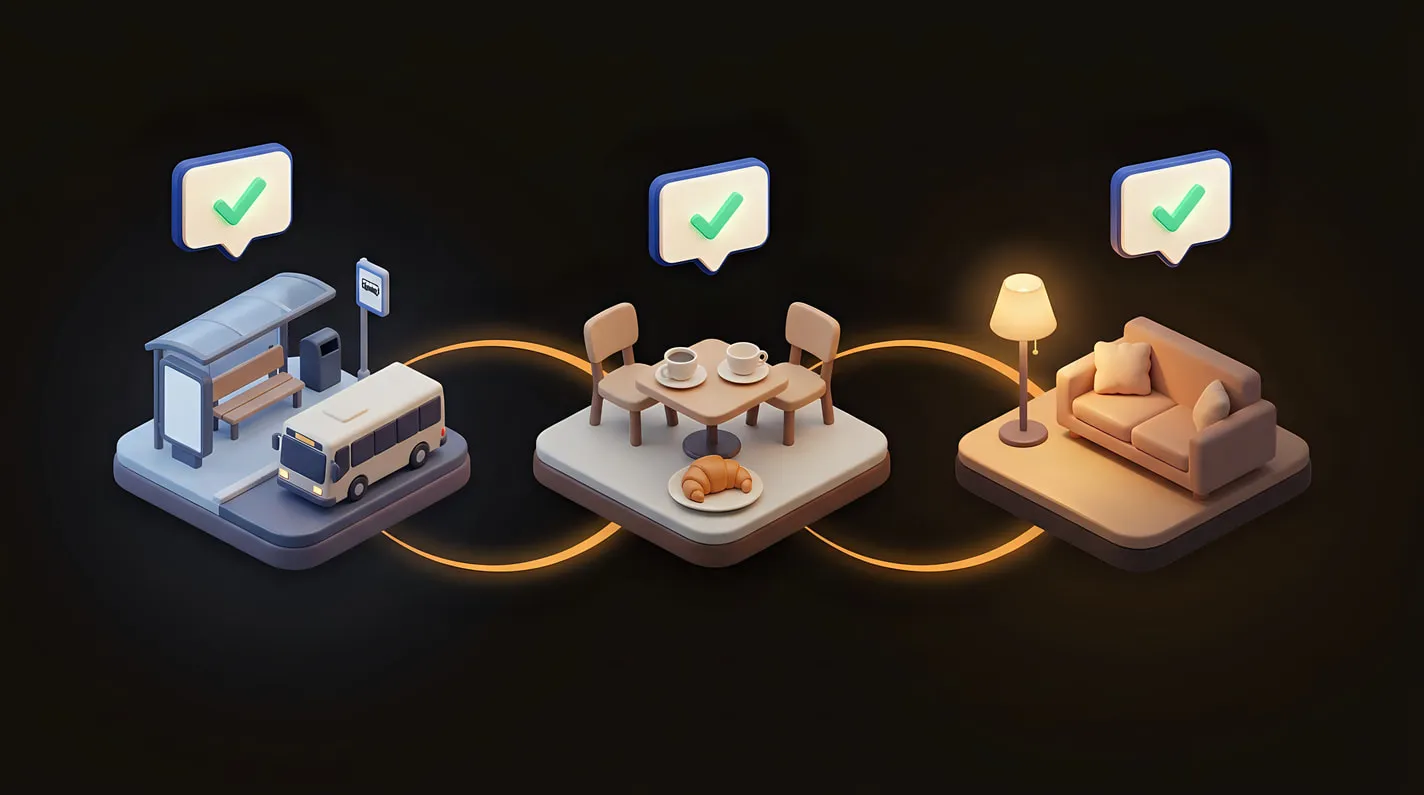
Say you’ve just started a job in Milan and pick up around ten new Italian words a day.
With Quizlet, you’d keep a set for the week. In the evening you add the day’s words, typing each term and its definition, or you paste your notes and let the AI tools build the set. Then you study it: Flashcards are open on the free plan, and Learn runs a limited number of times per set. If you want spaced repetition to decide what comes back, you open the Quizlet website for that part.
With PocketAnki, you send each word when you hear it, from the queue at the post office or the office kitchen. The card is ready a few seconds later and comes back for its first review within about two hours. The next day’s reviews turn up a few at a time without you opening anything. Words you rate Easy move days ahead, and the ones you forget come back within minutes. By Friday you haven’t built a single set, and the Monday words you keep missing are still coming back while the easy ones have gone quiet for a while.
Anki vs Quizlet vs PocketAnki for vocabulary
People choosing a vocabulary app often compare Anki and Quizlet first. Roughly: Quizlet is easier to start with and has the shared sets and the games. Anki has deeper scheduling with FSRS, add-ons and complete control over every card, but it takes setup, and its iPhone app cost $24.99 in the US App Store on 28 October 2026.
PocketAnki sits between them. Like Anki, it uses FSRS with four rating buttons. Like Quizlet, it asks almost nothing of you before the first review: pick your native language, the language you’re learning and a goal. Unlike either, it writes the card from the word you send, translated into your language. If Anki is the app you’re weighing, the Anki alternative page goes through that comparison in detail.
When a Quizlet alternative makes sense, and when it doesn’t
Keep Quizlet if your course or teacher uses it, if you study subjects beyond languages, or if games like Match and Blast keep you going. Its library of shared sets is its real strength, and PocketAnki has nothing like it. The closest thing is Daily Words: English and German learners can get 5 words a day from a list of 600 (for German, words for life in Germany, such as offices, work, housing and money).
PocketAnki is for the other case. You’re learning German, French, Italian or another of its 20 languages, you meet new words every day, and you want them back at the right moment without building sets. It doesn’t teach Japanese, Chinese or Korean. English learners can use it too, with cards translated into 26 native languages.
Moving your words over
There’s nothing to migrate in the usual sense. Go through your Quizlet sets, pick the words you still trip over, and send them to the bot one word or phrase per message; a pasted list gets a polite request to send the items one by one. Each word becomes a card with its own schedule, and new words go in the same way as you meet them.
To start, open the bot, press Start and choose your native language, the language you’re learning and your goal. A demo card arrives and comes back for review in about ten minutes, so you see the whole cycle on the first day.
The home page shows the Telegram vocabulary bot in more detail. If you’d like your flashcards inside Telegram, the Telegram flashcard bots page compares PocketAnki with MemoCard and a few open-source bots, and all comparisons are in one place.
Choose Quizlet if…
- You want to start from a ready-made set for your textbook or course.
- You study history, biology or law as well as languages.
- You like games such as Match and Blast, or your teacher assigns Quizlet sets in class.
- You learn Japanese, Chinese or Korean, which PocketAnki doesn't teach.
Choose PocketAnki if…
- You learn German, French, Italian or another of the 20 languages and collect words as you meet them.
- You want spaced repetition on your phone without a subscription or ads.
- You want every card to come with a translation into your own language and example sentences.
- You keep forgetting to open study apps but always answer Telegram messages.
Questions and answers
Is there a free Quizlet alternative without ads?
Yes. PocketAnki is a free Telegram bot with no ads and no paid plan. You send words, it makes the cards and brings them back for review on an FSRS schedule. It's built for language vocabulary, so for other subjects Quizlet or Anki fit better.
How much does Quizlet Plus cost?
It depends on your country and where you pay. On 28 October 2026 the US App Store listed Quizlet Plus as in-app purchases of $9.99 and $44.99. The free plan remains, with ads and a limited number of Learn rounds per set.
Does Quizlet have spaced repetition?
Yes, in Flashcards: you rate each card Repeat, Hard, Okay or Easy, and Quizlet picks when to show it again. Quizlet's Help Center says this mode is on the website only for now. PocketAnki uses FSRS and works wherever you have Telegram.
Anki vs Quizlet: which is better for vocabulary?
Quizlet is quicker to start and has shared sets and games. Anki has deeper scheduling with FSRS, add-ons and full control over cards, at the cost of setup and a paid iPhone app. PocketAnki uses FSRS like Anki and needs about as little setup as Quizlet.
What is the best app to learn words?
The one you'll keep using. For words from your own life in one of 20 languages, PocketAnki makes the cards and sends the reviews for you. For ready-made sets and games, Quizlet. For full control and any subject, Anki.
Which languages does PocketAnki teach?
20 learning languages, including German, French, Spanish, Italian, Polish, Dutch and English, with card translations into 26 native languages. Japanese, Chinese and Korean aren't among them.

Send the bot your first word
Press the button and send any word you came across today. The bot makes the card and brings it back when it’s time to review.
Start in TelegramSources
- Quizlet Help Center: Subscribing to Quizlet, accessed 28 October 2026
- Quizlet Help Center: Studying on Quizlet, accessed 28 October 2026
- Quizlet Help Center: Studying with Spaced Repetition, accessed 28 October 2026
- Quizlet Help Center: Finding flashcard sets, accessed 28 October 2026
- Quizlet, US App Store listing (in-app purchases, advertising), accessed 28 October 2026
- AnkiMobile Flashcards, US App Store listing, accessed 28 October 2026